
Reimagining Patient Access at Rush University System for Health
Creating Click for Care, a patient-centered scheduling platform that combines guided triage, Epic MyChart integration, and Fabric AI to help patients find and book the right care.
86%
increase in appointment page views
23%
increase in appointment scheduling clickthroughs
46,000
sessions, including 5,700+ new-to-Rush users
18,000+
sessions that led to patient care endpoints
Services Provided


THE CHALLENGE
Transforming Digital Appointment Scheduling for Rush University System for Health
Rush University System for Health, a leading academic health system in Chicago, aimed to transform how patients access care in a rapidly evolving digital landscape. Although Rush had a strong clinical reputation, its existing digital tools presented opportunities for improvement, particularly in how patients scheduled appointments. Digital-first entrants were introducing more streamlined, user-friendly, and retail-forward experiences that were reshaping patient expectations.
Rush set out to simplify the appointment booking process, improve the patient experience, and enhance operational efficiency across teams. Their goal was to create a seamless, intuitive scheduling platform that empowers patients to quickly find and book the right care while supporting Rush’s broader commitment to enhancing access and competing digitally.
To meet these objectives, Rush partnered with Modea to develop Click for Care, a patient-centered scheduling experience designed to reimagine care access and streamline the patient journey.
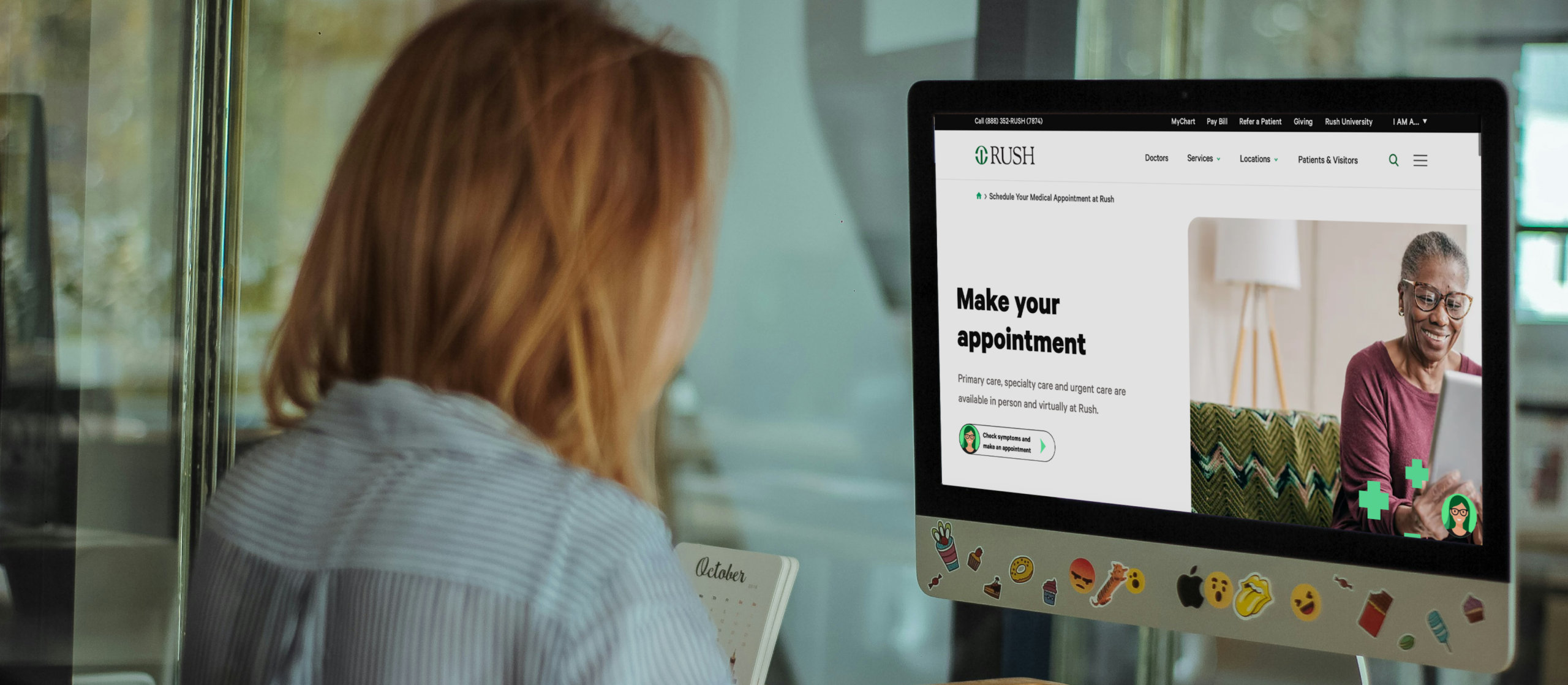
A patient-centered desktop experience optimized for fast, direct appointment conversion across care pathways.
OUR APPROACH
Human-Centered Design Meets Technical Excellence
Building the Strategy Around Patient and Operational Needs
Modea collaborated closely with Rush stakeholders across marketing, digital strategy, IT, and patient access to define a clear product vision prioritizing ease of access for patients and operational efficiency for internal teams. We also leveraged Modea’s extensive UX research and behavioral studies to ensure every product decision was rooted in a deep understanding of patient behavior and internal workflows.
Our research focused on simplifying appointment access by addressing patient pain points, optimizing call center workflows, and resolving backend scheduling complexities. This user-centric approach ensured that both patient needs and operational realities were thoroughly considered from the outset.
Designing a Condition-First Care Access Strategy
Through collaborative sessions, Modea and Rush established a clear digital product strategy for a unified appointment experience centered around symptom search and guided triage. The strategy prioritized simplifying navigation, reducing booking friction, and delivering a mobile-first, accessible experience. Personalized care pathways were designed to tailor options by symptom, urgency, and location.
We worked with Rush to determine a phased rollout plan that would minimize disruption and encourage adoption across teams. This approach ensured alignment on patient experience goals and operational priorities.
Creating a More Intuitive Path to the Right Care
With the strategy in place, Modea crafted a modern user interface grounded in healthcare UX principles focused on clarity, simplicity, and patient empowerment. The design presents a condition-first scheduling model enabling one-click access to care based on symptom input, simplifying patient decision-making and providing a foundation for expanding to other service lines.
The UI delivers a unified care pathway sequence, clearly differentiating urgent care, primary care, and virtual specialty care options based on urgency and location. In-person care options are still prominent, ensuring patients can easily access traditional services alongside virtual offerings.
Frequent collaboration and review sessions with Rush stakeholders ensured the UI design balanced patient needs, operational priorities, accessibility standards, brand alignment, and usability throughout the creative process.
Connecting the Experience to Rush’s Digital Ecosystem
Modea’s engineering team applied modern website development practices to translate the vision and design into reality. We updated the Drupal backend and theme to support new scheduling features while ensuring a consistent brand experience across all Rush web properties. To do this, we created a reusable component library that will allow for future enhancements consistent with Rush’s new brand standards.
We took a rigorous approach to product quality, focusing on performance optimization to deliver a fast and responsive experience. This was especially important on mobile devices, which serve as the primary access point for many Rush patients.
A critical part of the development was the EHR integration with Epic MyChart via deep links, preserving essential backend workflows while enabling an intuitive front-end user experience. Modea also implemented Fabric, an AI-powered chatbot that offers personalized symptom triage and guides patients through the scheduling process.
Together, these technical advancements support Rush’s digital transformation goals and help improve care access for patients.
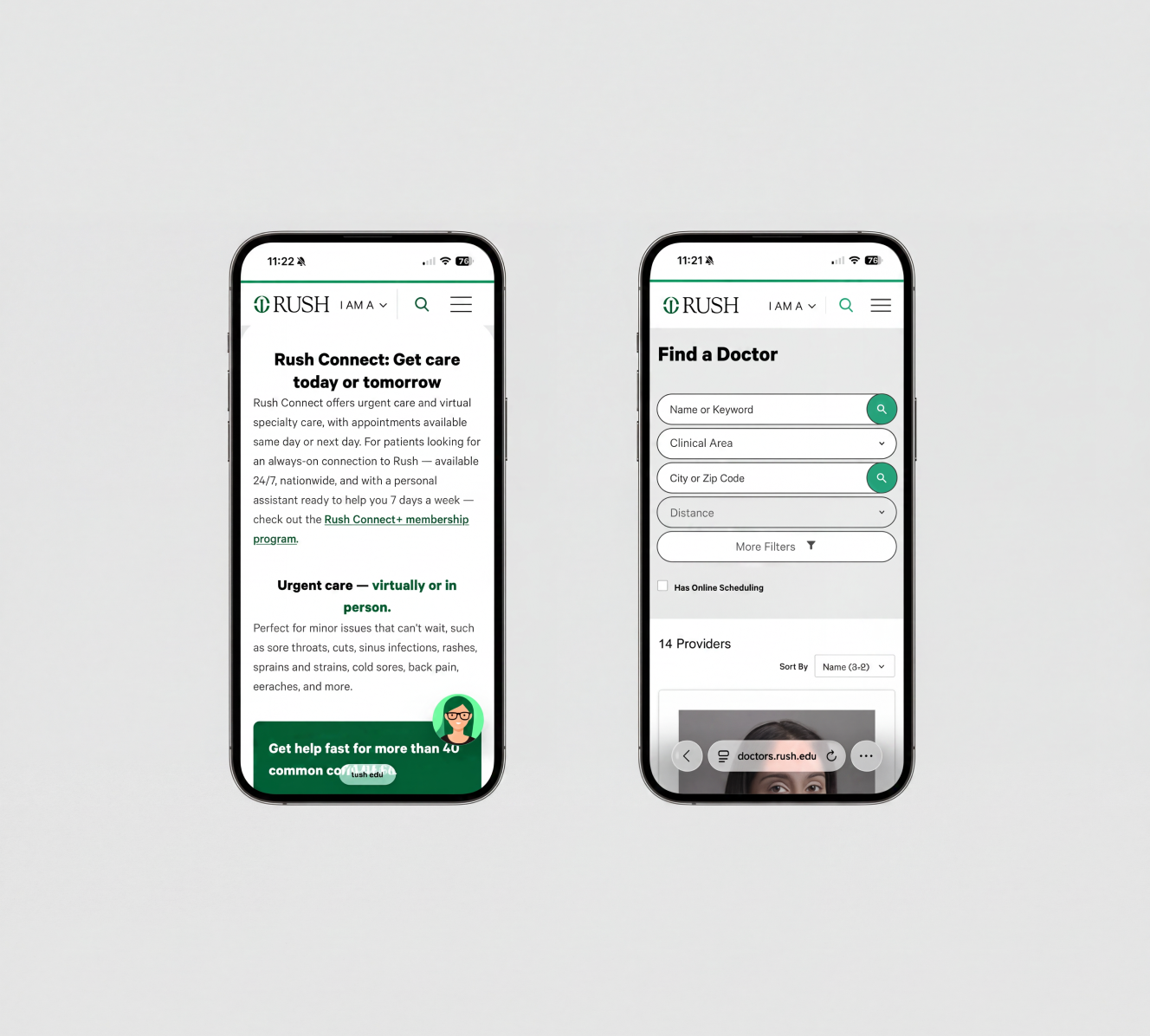

Seamless experience across all devices with responsive design optimized for patient workflows.
“Click for Care [represents] a foundational shift in how patients engage with Rush—simple, guided, and digital-first.”
— Senior Director, Digital & Web Strategy at Rush
THE RESULTS
Measurable Impact on Patient Access and Satisfaction
Within six months of launching Click for Care, Rush transformed its appointment hub into a high-performing digital front door serving over 46,000 sessions. The new experience helped more patients move from searching for care to taking action, while expanding access to virtual services and creating new opportunities for Rush to reach and acquire patients.

Accelerated Page Views & Clickthroughs
Drove an 86% increase in appointment page views and a 23% boost in scheduling clickthroughs across all service lines.

Scaled Virtual Specialty Care
Achieved a 2.5x increase in virtual specialty care appointments through clear, guided triage pathways.

Acquired New-to-System Patients
Generated 46,000 total sessions—including over 5,700 new-to-Rush users and 18,000+ sessions leading directly to patient care endpoints.

Improved Accessibility
Full WCAG 2.2 AA compliance ensures the platform is accessible to all patients, including those with disabilities.
TECHNOLOGY STACK
Built with Modern, Scalable Technologies



FAQs
How can healthcare organizations improve online appointment scheduling?
Healthcare organizations can improve online scheduling by simplifying navigation, reducing friction, and guiding patients toward the most appropriate care option. Rush’s Click for Care experience introduced symptom-based scheduling pathways that helped patients quickly find and book care based on their needs.
What is a condition-first scheduling experience?
A condition-first scheduling experience allows patients to begin their care journey by describing symptoms or conditions rather than searching through departments or provider lists. This approach simplifies decision-making and helps connect patients with the right care more efficiently.
How does Epic MyChart integration support patient access?
Epic MyChart integration allows healthcare organizations to maintain scheduling, patient records, and operational workflows while creating more intuitive digital experiences. For Rush, Epic MyChart deep linking preserved backend functionality while improving the front-end scheduling experience.
How can AI improve healthcare appointment scheduling?
AI-powered tools can help patients navigate complex care options, identify appropriate services, and reduce scheduling friction. Rush integrated Fabric AI to provide symptom-based guidance and support patients throughout the scheduling process.
Why is digital product strategy important in healthcare?
Digital product strategy helps healthcare organizations align patient needs, business goals, and operational requirements before investing in new technology. By establishing a clear vision and phased implementation plan, Rush was able to create a scalable scheduling platform that supports long-term digital transformation.