
Transforming Patient Access Through Mobile-First Healthcare Design
Redesigning Carilion Clinic’s digital experience to deliver a frictionless, mobile-first web platform that improves patient engagement, speeds up search, and boosts retention.
35%
Improvement in user retention
27%
Reduction in mobile page load times
25%
Increase in mobile engagement


THE CHALLENGE
Overcoming Friction for Mobile-First Healthcare Consumers
Carilion Clinic is a not-for-profit healthcare provider based in Roanoke, Virginia. When the organization partnered with Modea, its website was struggling to keep pace with changing patient expectations and increasing competition.
More than 60% of website visitors were accessing the site from mobile devices, yet the experience created friction for users attempting to complete common tasks. Content was siloed across specialties, navigation was inconsistent, and key actions such as finding a provider, scheduling an appointment, paying a bill, or accessing telehealth services were often difficult to complete.
Carilion needed a modern digital experience that would better connect patients to care, improve discoverability, and support long-term growth.
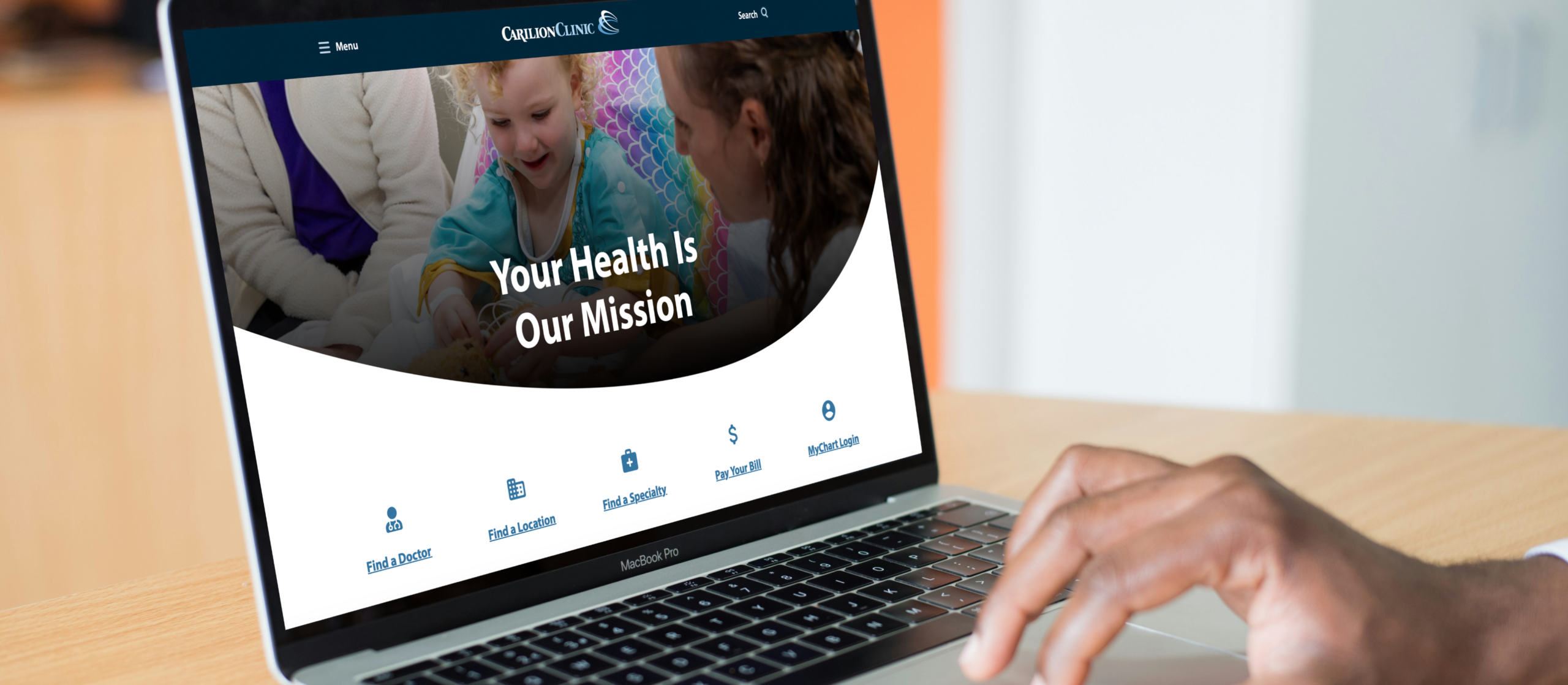
Mobile-first web design empowering patients to easily search providers, book appointments, and access virtual care on-the-go.
OUR APPROACH
Patient-Centered Strategy Meets Modern Platform Architecture
Modea combined deep journey mapping, UX/UI iteration, and modern front-end engineering to deliver a scalable, mobile-first ecosystem.
Redesigning Around Patient Goals, Not Org Structure
Modea began with analytics reviews, user experience research, and patient journey mapping to understand how visitors interacted with Carilion’s digital properties. Through interviews, surveys, user testing, and persona development, the team identified four core audience groups and redesigned the experience around patient goals rather than organizational structures.
Connecting Siloed Content Through Contextual Navigation
Modea designed a mobile-first experience that connected previously siloed content through contextual navigation, stronger cross-linking, and clear calls-to-action. Over an ongoing partnership, Modea introduced super-specialty templates, enhanced condition/service cross-linking, and implemented assisted search informed by patient behavior. During the COVID-19 pandemic, the team also designed a dedicated video visits experience for virtual care access.
Rebuilding on Angular With Automated Provider Data
Modea rebuilt Carilion’s digital platform to improve performance, scalability, accessibility, and long-term maintainability. The team migrated the site from a legacy CMS to an enterprise platform, implemented Solr-powered natural language search, built a responsive Angular front-end, and automated provider/location data management through Cactus feed integration.
- Audience Persona Mapping: Developed 4 core patient personas to guide site hierarchy and messaging.
- Solr-Powered Natural Language Search: Implemented intelligent search with synonym recognition to handle condition-based queries.
- Automated Data Feeds: Integrated Cactus data feeds to automate provider and location directory updates.
- Modern CI/CD Pipeline: Established Bitbucket pipelines for smooth deployments and high code quality.
- WCAG AA Compliance: Built and tested to maintain strict web accessibility standards across all device types.
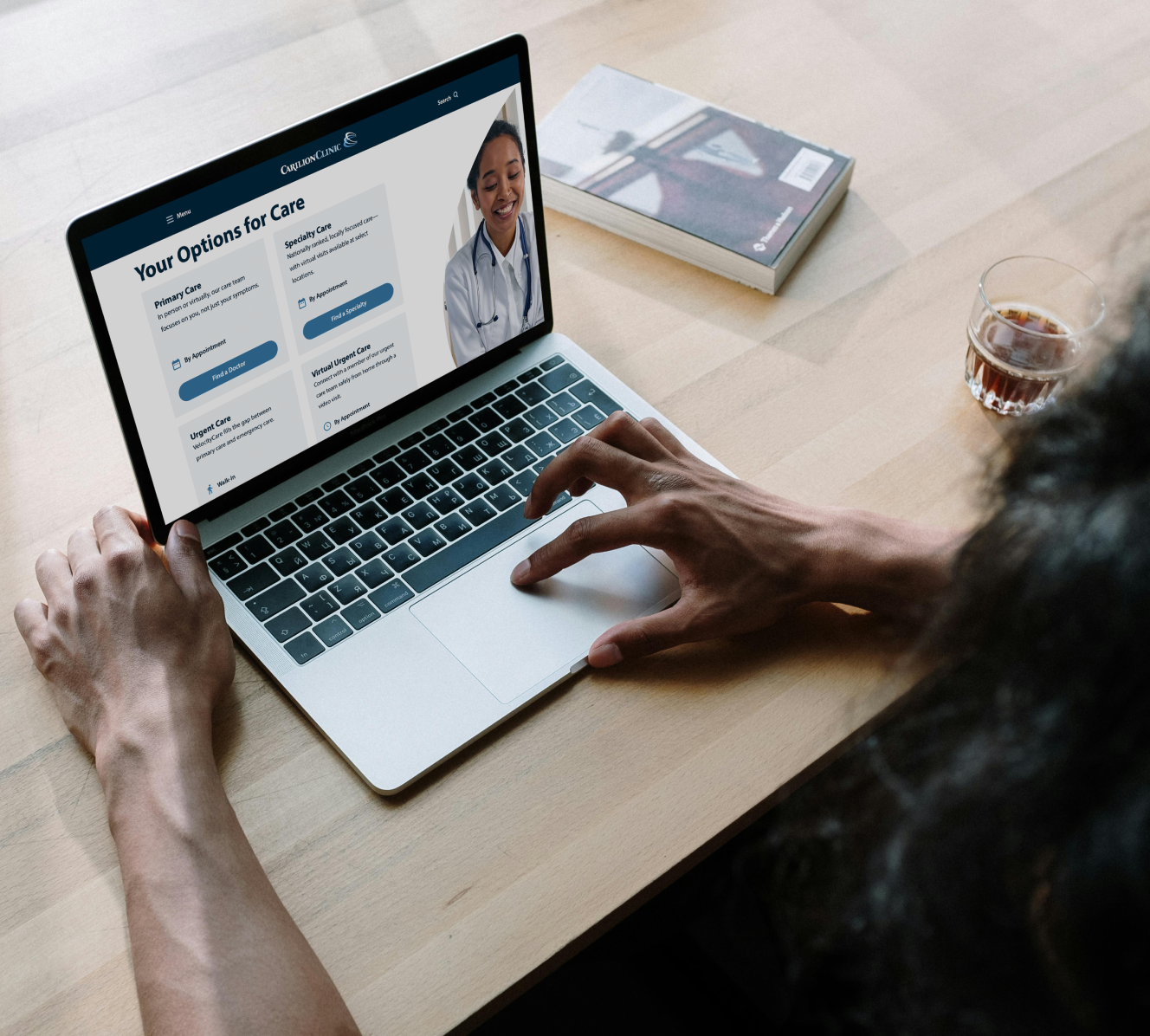
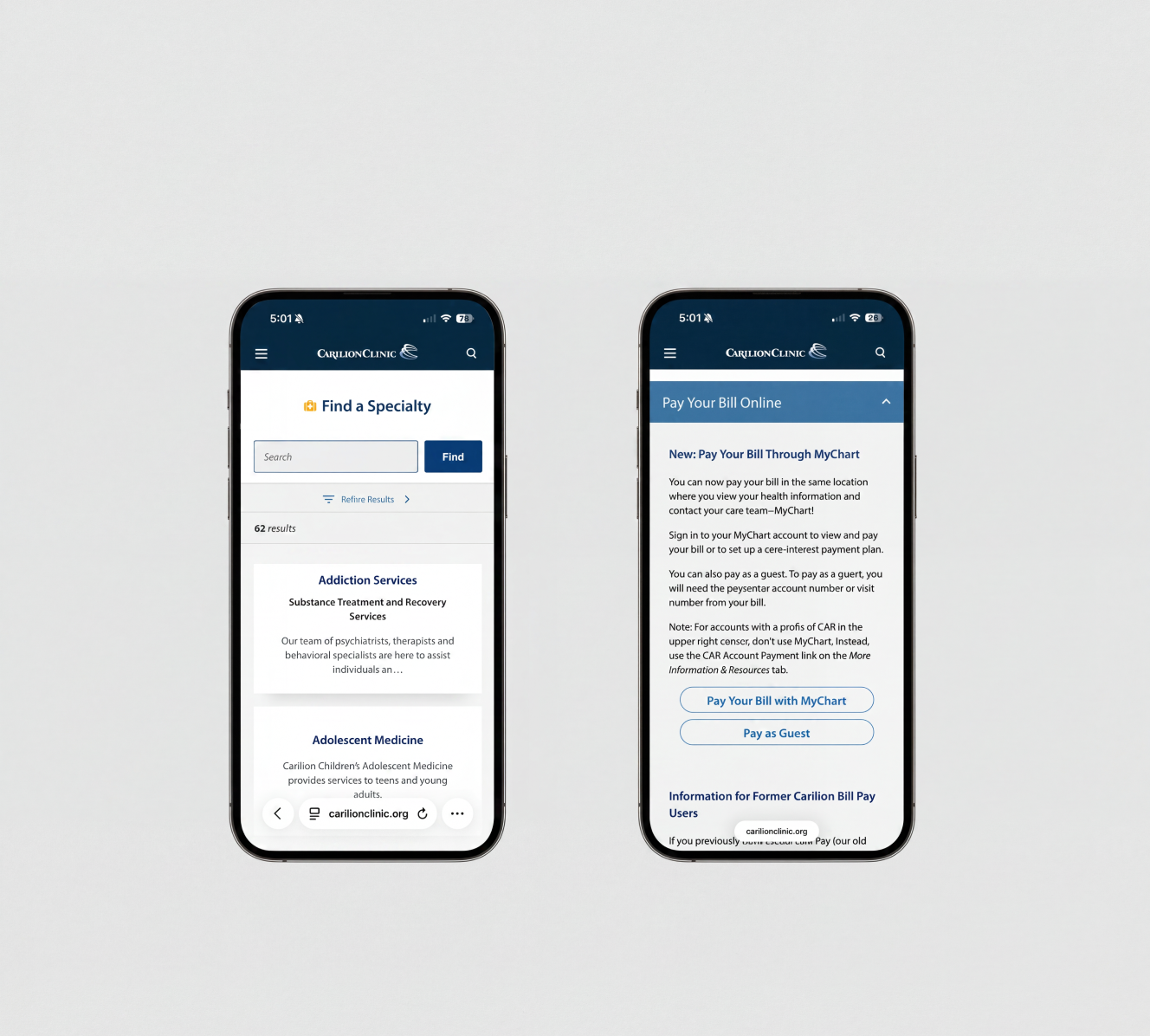
A cohesive, cross-device interface designed to simplify how patients navigate care options on desktop and access key utilities on mobile.
"We built a site that offers customers a frictionless healthcare digital experience from the palm of their hand. Patients can book an appointment, find a doctor, pay a bill, or search for a nearby location—all while on-the-go."
— Software Engineering Lead, Modea
THE RESULTS
Measurable Impact on Engagement, Retention, and Site Speed
Carilion Clinic‘s redesigned website delivered significant improvements across patient engagement, retention, and performance while driving higher traffic to core care pages. The faster, more intuitive mobile experience made it easier for patients to navigate the site, discover relevant care information, and stay engaged throughout their digital journey.

Award-Winning Web Experience
Earned top industry honors, including the eHealthcare Leadership Award for Best Mobile Website and a W3 Award for Best Practices.

Accelerated Load Performance
Reduced mobile page load times by 27%, delivering a fast, responsive user experience across all devices and connection speeds.

Strengthened User Retention
Improved user retention by 35% through streamlined navigation, contextual cross-linking, and clearer pathways to care.

Increased Mobile Engagement
Boosted mobile engagement by 25%, reflecting widespread adoption among patients searching for care via smartphones and tablets.
TECHNOLOGY STACK
Built with Scalable, High-Performance Technologies




FAQs
Why is mobile-first website design important for healthcare organizations?
Mobile-first design prioritizes the experience for users accessing a website from smartphones and tablets. As mobile traffic continues to grow, healthcare organizations need digital experiences that allow patients to quickly find providers, schedule appointments, access care information, and complete common tasks from any device.
How can healthcare websites improve patient access to care?
Healthcare websites can improve patient access by reducing friction throughout the patient journey. Features such as online scheduling, provider search, location finders, telehealth access, and clear calls-to-action help patients connect with the right care more quickly and confidently.
What role does search play in the healthcare digital experience?
Search is often one of the primary ways patients navigate healthcare websites. Advanced search functionality, natural language processing, and condition-based discovery tools help users find providers, specialties, locations, and services more efficiently, improving both satisfaction and conversion rates.
Why do healthcare organizations modernize their digital platforms?
Modern digital platforms improve website performance, security, scalability, and content management capabilities. By moving away from legacy systems, healthcare organizations can create more flexible experiences that adapt to changing patient expectations and support long-term digital growth.
How does accessibility improve healthcare websites?
Accessibility ensures digital experiences can be used by people with a wide range of abilities and needs. Designing to WCAG standards improves usability, supports compliance efforts, and helps healthcare organizations deliver equitable access to information and services for all patients.