
Transforming Patient Access for Luminis Health
Consolidating over 20 fragmented websites into a single, Epic-integrated digital platform that drives online self-scheduling and reduces call center reliance.
90%
Reduction in click-to-call volume, shifting patients to self-service
75%
Increase in digital self-scheduling adoption
57%
Increase in scheduling-related revenue
Services Provided


THE CHALLENGE
Unifying a Fragmented Ecosystem Following a Major Merger
Following the merger of two regional health systems, Luminis Health faced the challenge of unifying a fragmented digital ecosystem while establishing a cohesive brand identity.
Patients navigated more than 20 separate websites, creating inconsistencies in the user experience and making it difficult to find information, access services, and schedule care online. At the same time, Luminis Health sought to increase digital self-scheduling, improve accessibility, and create a more consumer-friendly experience that reflected the organization’s vision for patient-centered care.
The organization needed a modern digital platform that could streamline access to care, support personalization, and integrate seamlessly with Epic MyChart while reducing friction across the patient journey.

Consolidated digital front door replacing 20+ disparate health system websites into a unified brand experience.
OUR APPROACH
Strategic Consolidation Meets Deep Epic EHR Integration
Modea partnered with Luminis Health to build a unified digital experience centered on patient goals rather than internal organizational structures.
Conducting In-Depth Research and User Discovery
Modea’s product strategy process included more than 25 stakeholder interviews, one-on-one customer interviews, moderated user testing with 30 participants, web surveys, heuristic evaluations, competitive analysis, and analytics reviews. This extensive research provided a comprehensive understanding of patient behaviors and care journeys across the newly formed system.
Designing a Consolidated, Modular User Experience
Modea worked closely with Luminis Health to consolidate content from more than 20 websites into a single platform. Using atomic design principles, the team developed a scalable design system, streamlined navigation, and created action-oriented user flows. Service line pages were transformed into high-performing landing pages, reducing the search-to-scheduling journey to as few as three clicks.
Building a Secure Technical Implementation with Epic Integration
Modea built a custom authenticated patient experience directly into the website using Acquia/Drupal and custom Epic MyChart integrations. Through secure APIs, patients gained direct access to self-scheduling, personalized dashboards, and direct booking from provider profiles without leaving the Luminis Health web experience. The build also included a custom-branded chatbot to support patient engagement.
- Massive Digital Consolidation: Merged 20+ legacy websites into a single, scalable enterprise platform.
- 3-Click Scheduling Flow: Reduced friction so users can navigate from search to appointment booking in as few as 3 clicks.
- Atomic Design System: Developed a modular UI component library to ensure long-term brand consistency and scalability.
- Authenticated Epic Dashboard: Integrated custom APIs to display personalized MyChart data directly on web pages.
- 40% Organic Search Attribution: Optimized service line landing pages to capture high-intent organic search traffic.
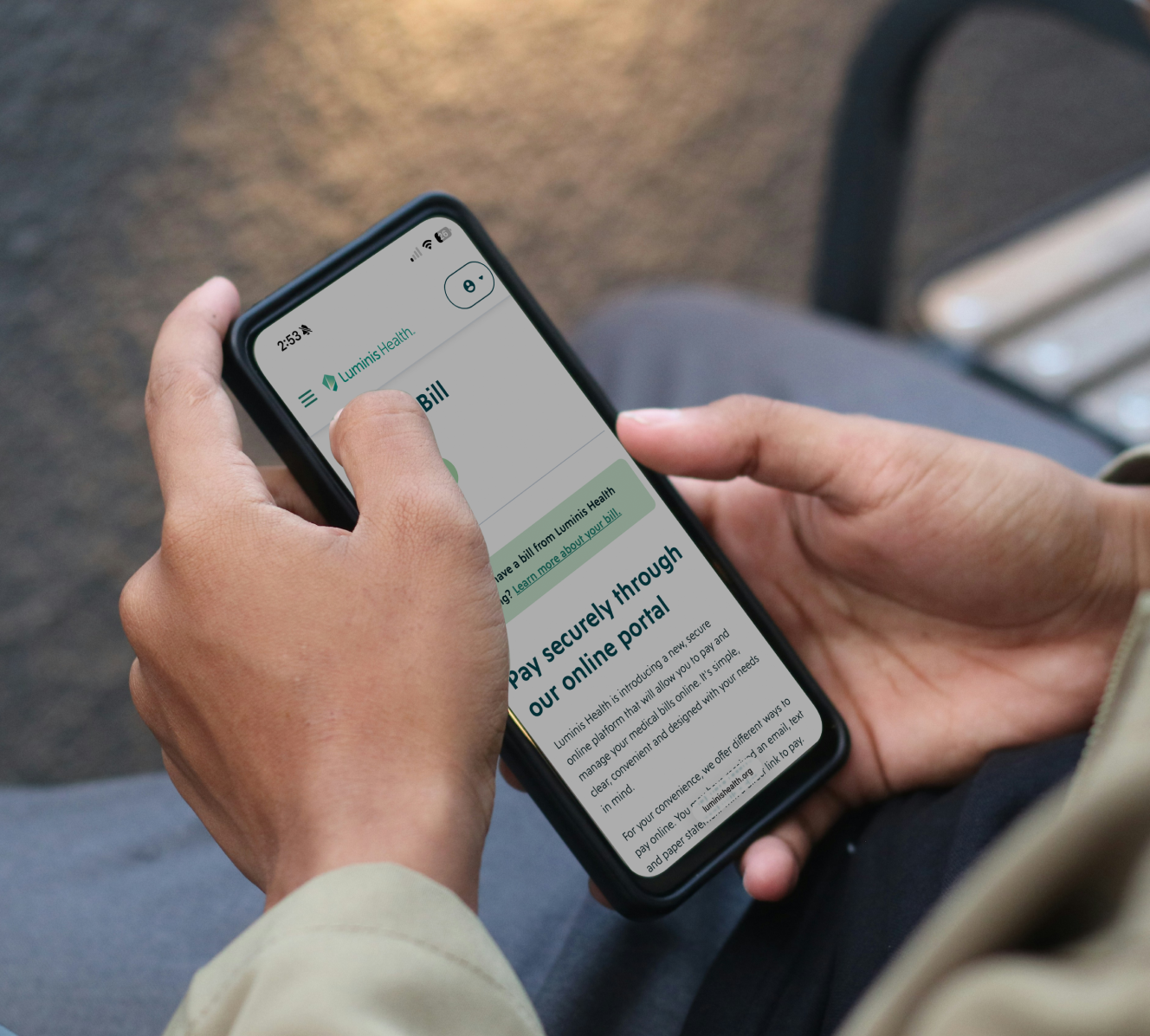
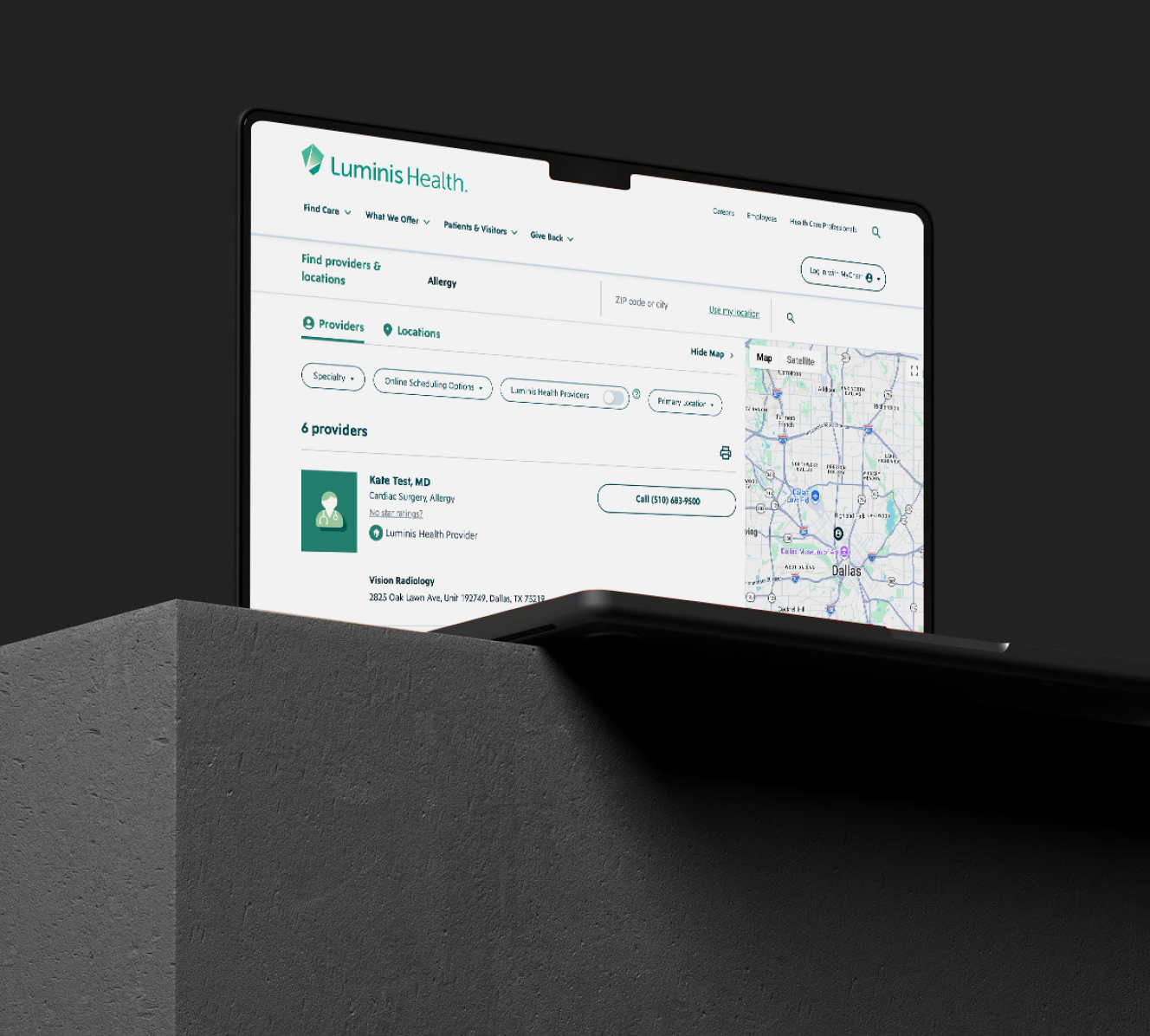
A unified digital experience allowing patients to easily locate doctors on desktop and manage secure tasks like bill pay on mobile.
THE RESULTS
Measurable Impact on Digital Self-Service and System Revenue
The redesigned platform transformed Luminis Health’s web presence into a high-converting, personalized digital front door that serves over 250,000 monthly users. By making it easier for patients to find and schedule care online, the new experience drove greater adoption of digital self-service while delivering measurable operational and financial impact for the health system.

Full WCAG AA Compliance
Delivered an inclusive, accessible, and mobile-friendly experience meeting strict accessibility standards for all patient populations.

Boosted Scheduling Revenue
Generated a 57% increase in scheduling-related revenue while driving sustained growth in patient engagement.

Reduced Call Center Dependency
Decreased click-to-call volume by 90%, shifting care navigation away from phone call bottlenecks toward automated digital self-service.

Drove Digital Self-Scheduling
Increased online appointment self-scheduling by 75%, reflecting rapid patient adoption of seamless digital booking tools.
TECHNOLOGY STACK
Built with Scalable, High-Performance Technologies



FAQs
How can healthcare organizations create a more consumer-friendly digital experience?
Healthcare organizations can improve digital experiences by simplifying navigation, reducing friction, prioritizing accessibility, and designing around patient goals rather than internal organizational structures. Luminis Health applied these principles to create a personalized, mobile-friendly experience that makes it easier for patients to find information and schedule care.
What role does user research play in healthcare website redesigns?
User research helps healthcare organizations understand patient needs, behaviors, and barriers to care before designing new digital experiences. Through interviews, user testing, surveys, and analytics, organizations can make informed decisions about navigation, content, and functionality that improve patient engagement and access.
Why is online self-scheduling important for healthcare organizations?
Online self-scheduling gives patients greater flexibility and convenience while reducing reliance on call centers. For Luminis Health, improving the scheduling experience helped increase digital self-scheduling by 75% and significantly reduce click-to-call volume.
How does Epic MyChart integration improve patient access?
Epic MyChart integration allows patients to complete important tasks, such as scheduling appointments and accessing personalized health information, directly within a health system’s digital experience. By reducing the number of steps required to access care, organizations can create more convenient and connected patient journeys.